
The History of Edfu Temple
Edfu Temple wasn’t built overnight. To understand its magnificence, we need to travel back to the Ptolemaic era (332-30 BCE), a period following the death of Alexander the Great. Egypt, then ruled by Ptolemy I, one of Alexander’s generals, witnessed a resurgence of interest in pharaonic traditions. This era saw a flurry of temple construction, with Edfu Temple being one of the grandest undertakings.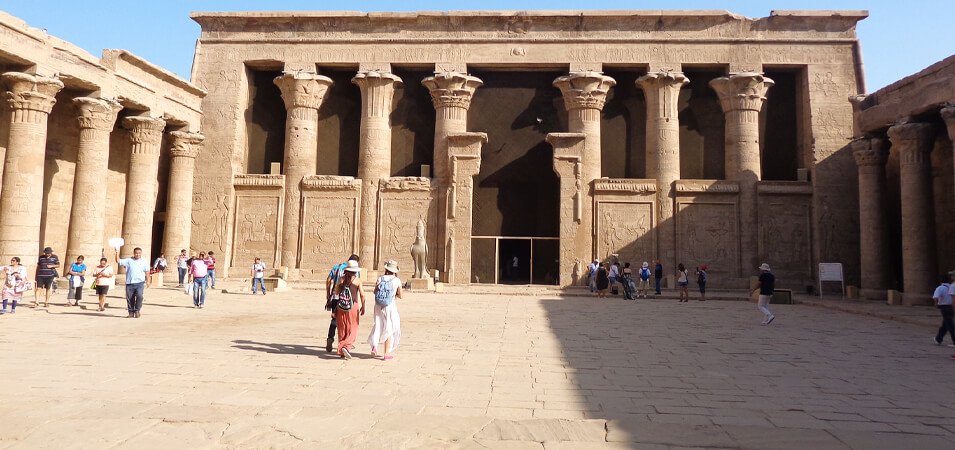
A Long and Grand Construction
Construction of Edfu Temple began in 237 BCE under the reign of Ptolemy III Euergetes, a pharaoh known for his patronage of the arts and sciences. Unlike most building projects, Edfu Temple took a staggering 180 years to complete! The dedication ceremony finally took place in 57 BCE, during the reign of Ptolemy XII Auletes. This extended construction period reflects the temple’s immense scale and intricate details.More Than Just Worship: A Multifaceted Center
Edfu Temple wasn’t just a place of worship; it was a bustling center of activity:- Religious Hub: Elaborate religious ceremonies were held daily, with priests performing rituals to appease the gods and ensure a bountiful harvest.
- Economic Engine: The temple complex housed workshops, granaries, and administrative offices, functioning as a mini-city and a significant economic hub for the surrounding region.
- Symbol of Ptolemaic Power: The towering pylons, adorned with images of victorious pharaohs defeating their enemies, were a clear message of the Ptolemaic dynasty’s strength and legitimacy to rule Egypt. The meticulous craftsmanship and sheer scale of the temple were testaments to the Ptolemies’ commitment to reviving the grandeur of ancient Egypt, solidifying their place as pharaohs in the eyes of the people.
Unveiling the Architectural Wonders of Edfu Temple
Step through the grand entrance of Edfu Temple, and prepare to be awestruck by its architectural magnificence. Every element, from the colossal gateway to the innermost sanctuaries, is meticulously designed to inspire reverence and reflect the grandeur of the falcon god Horus. Let’s embark on a journey through the architectural marvel of Edfu Temple:A Monumental Entrance: The Pylon
The exploration begins at the towering pylon, the temple’s monumental entrance. Imagine two colossal, sloping walls adorned with intricate hieroglyphics depicting the pharaoh smiting his enemies. These scenes weren’t merely decorative; they served a symbolic purpose: showcasing the pharaoh’s power and his role as the protector of Egypt. The pylon wasn’t just an entrance; it was a symbolic transition from the earthly realm to the sacred space beyond.A Forest of Columns and Beyond
As you pass through the pylon, a journey of increasing sacredness unfolds:- Hypostyle Hall: A breathtaking sight awaits: the hypostyle hall, a vast space seemingly supported by a forest of colossal columns. Imagine towering pillars adorned with vibrant floral and geometric patterns, their ceilings painted with astronomical scenes and offerings to the gods. This hall wasn’t just a structural marvel; it served as a place for large gatherings and religious processions. The sheer scale and intricate decorations aimed to overwhelm the senses and create an atmosphere of awe-inspiring grandeur.
- Inner Chambers: Beyond the hypostyle hall lies a series of progressively smaller chambers, each leading you closer to the heart of the temple – the sanctuary. Here, the focus shifts from grand displays to intimate rituals. The walls are adorned with detailed reliefs depicting offerings made to the gods and scenes from Egyptian mythology. Statues of deities, once adorned with gold and precious stones, stand guard, their stoic expressions adding to the sacred atmosphere.
A Divine Order: Symmetry and Alignment
Every aspect of Edfu Temple’s architecture reflects a deep reverence for order and symmetry. The central axis aligns perfectly with the rising sun, symbolizing the divine light entering the temple. The corresponding placement of chambers and decorations reinforces the idea of a balanced and harmonious universe. This meticulous attention to detail wasn’t just aesthetic; it reflected the Egyptians’ belief in the interconnectedness of the physical and spiritual realms.A Story in Stone: Decoding the Details
Edfu Temple isn’t just a structure; it’s a story etched in stone. Here’s how the details whisper tales of the past:- Hieroglyphs: The walls are adorned with thousands of hieroglyphs, a sacred language that tells stories of pharaohs, gods, and the rituals performed within the temple. These hieroglyphs aren’t merely decorations; they are a window into the beliefs and practices of ancient Egypt.
- Statues and Reliefs: Detailed statues and reliefs bring these stories to life. Witness pharaohs making offerings to the gods, priests performing intricate rituals, and scenes from Egyptian mythology depicted in vivid detail.
- Materials and Symbolism: The materials used for these sculptures were also symbolic. Granite, a hard and enduring stone, was used to depict deities, representing their eternal nature. Sandstone, a softer material, was used for scenes of human pharaohs, acknowledging their mortality.
The Significance of Edfu Temple
Edfu Temple stands not just as a monument of stone, but as a window into the heart of ancient Egyptian civilization. By stepping through its gates, we gain a deeper understanding of their religious beliefs, social structures, and the very fabric of their lives.- A Glimpse into the Afterlife: The elaborate rituals and offerings depicted on the temple walls reveal the Egyptians’ fascination with the afterlife. They believed in a journey to the underworld, where the soul faced judgment before joining Osiris, the god of the dead, in a blessed existence. Edfu Temple reflects the importance they placed on ensuring a safe passage to this eternal paradise.
- Rituals and the Divine Order: Daily ceremonies performed by priests were central to Egyptian life. These rituals, depicted in detail on the temple walls, were believed to appease the gods, ensure a bountiful harvest, and maintain cosmic order. Edfu Temple served as a stage for these vital rituals, connecting the earthly realm with the divine.
- Temples: The Center of Society: Egyptian temples weren’t just places of worship; they were bustling centers of community life. Edfu Temple housed workshops, administrative offices, and granaries, functioning as a microcosm of the entire society. By studying its layout and purpose, we gain valuable insights into the social and economic structures of ancient Egypt.
Visitor’s Guide to Edfu Temple
Edfu Temple awaits, but before you embark on your Egyptian adventure, here’s a practical guide to ensure a smooth and enriching visit: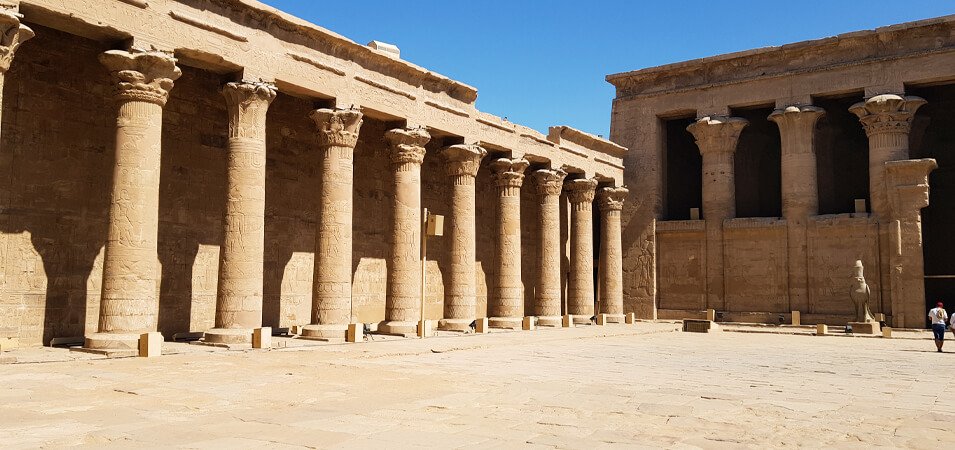
- Getting There: Edfu lies majestically on the east bank of the Nile River, roughly halfway between Luxor and Aswan. From Cairo, you can reach Edfu by plane (flying into Luxor) or by train, with a connecting taxi ride to the temple itself. Many Nile cruises also include Edfu Temple as a stop, offering a scenic journey along the river.
- Temple Hours and Fees: Edfu Temple is typically open from 7:00 am to 4:00 pm during October through May, and from 7:00 am to 5:00 pm during June through September. Entrance fees are quite reasonable, with discounts for students. Consider purchasing a combo ticket if you plan to visit nearby temples like Kom Ombo.
- Respectful Attire: As with most religious sites in Egypt, dressing modestly is recommended. Opt for long pants or skirts that cover the knees, and shirts with sleeves. This demonstrates cultural sensitivity and ensures a comfortable visit.
- Guides: Unveiling Hidden Secrets: Hiring a knowledgeable guide can significantly enhance your experience. They can decipher the hieroglyphs, explain the intricacies of temple rituals, and bring the history of Edfu Temple to life with vivid storytelling.
- Beating the Heat and Crowds: The Egyptian climate can be scorching, especially during the summer months. Aim for early morning or late afternoon visits to avoid the midday heat. Similarly, consider visiting during the shoulder seasons (spring and fall) to avoid peak tourist crowds.